


How to Choose the Right Carton Boxes So Your Products Arrive Safely?
- Match ply and flute strength to product weight: 3-ply for up to 5 kg, 5-ply for 5 to 15 kg, 7-ply for 15 kg and above
- Leave 1 to 2 inches of clearance inside the box for cushioning, no more, to stop the product shifting in transit
- Ask suppliers for the ECT (Edge Crush Test) rating before ordering if boxes will be stacked or stored for more than a few weeks
- Reused boxes and under-taped seams are the two most common causes of damaged shipments
Carton boxes fail in transit for three reasons: board strength that does not match product weight, box size that does not match product dimensions, or a compression rating that does not match stacking height in storage and transport. Matching all three to the specific product determines whether it arrives intact.
What Determines Carton Box Strength?
Ply is the number of paper layers in the corrugated board and the main factor in load capacity. 3-ply suits garments, stationery, and light retail goods up to around 5 kg. 5-ply suits packaged food, small electronics, and bottled goods between 5 and 15 kg. 7-ply suits machinery parts, bulk industrial goods, and export cargo above 15 kg, or products facing rough handling.
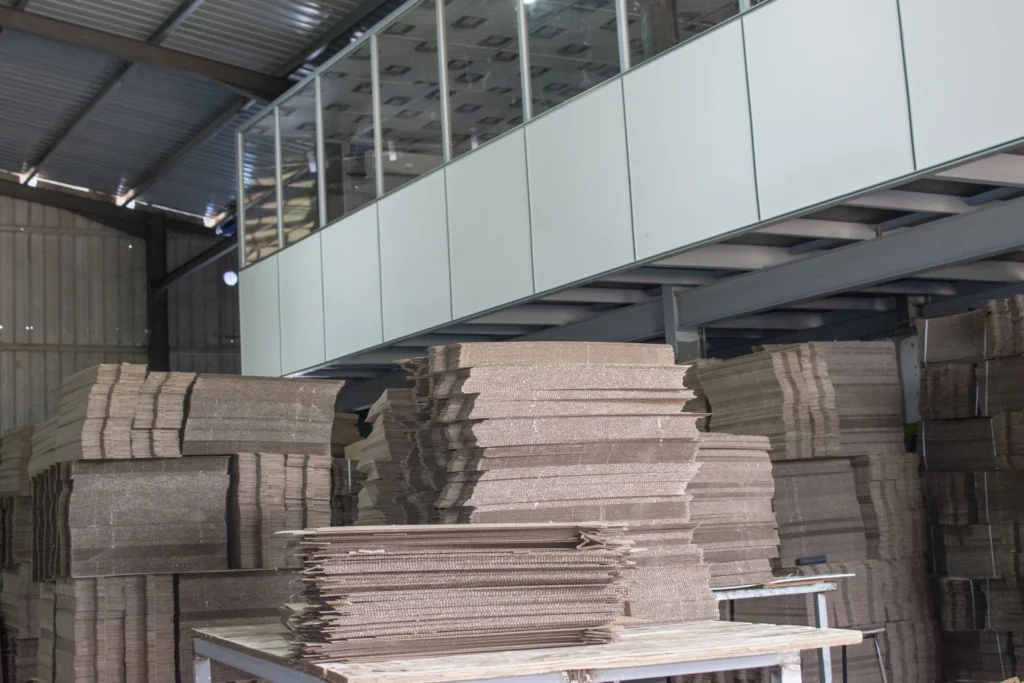
Flute size, the wave-shaped layer between the liners, affects cushioning and stacking strength independently of ply. B-flute is thinner and prints more cleanly, suited to retail-facing boxes. C-flute is thicker and cushions better for general shipping. BC-flute, a double wall construction, suits heavy loads or long-distance transport needing both crush resistance and cushioning.
What Size Carton Box Do You Need for Your Product?
Box size affects protection as much as board strength. An oversized box lets the product shift in transport, causing impact damage even when the board is correctly rated for the weight. An undersized box puts direct pressure on the product and can split the box at its seams. Standard clearance is 1 to 2 inches on each side, filled with cushioning such as paper fill, air pillows, or corrugated inserts. Businesses shipping a consistent product range reduce both damage rates and void-fill cost by moving to custom-sized boxes instead of one generic size for different products.
What Are ECT and BCT Ratings and Why Do They Matter?
Two figures are worth requesting before ordering, not after a damage complaint. The Edge Crush Test (ECT) measures how much force a box withstands on its edge before crushing, and matters most for boxes stacked on pallets or in warehouse storage. The Bursting Strength Test, also called the Mullen Test (BCT), measures the pressure a flat panel withstands before puncturing, more relevant for sharp or irregular items. For cartons stacked in storage for more than a few weeks, ECT is the more relevant figure, since humidity and time reduce compression strength gradually, even without a single high-impact event.
Which Carton Box Type Suits Different Business Uses?
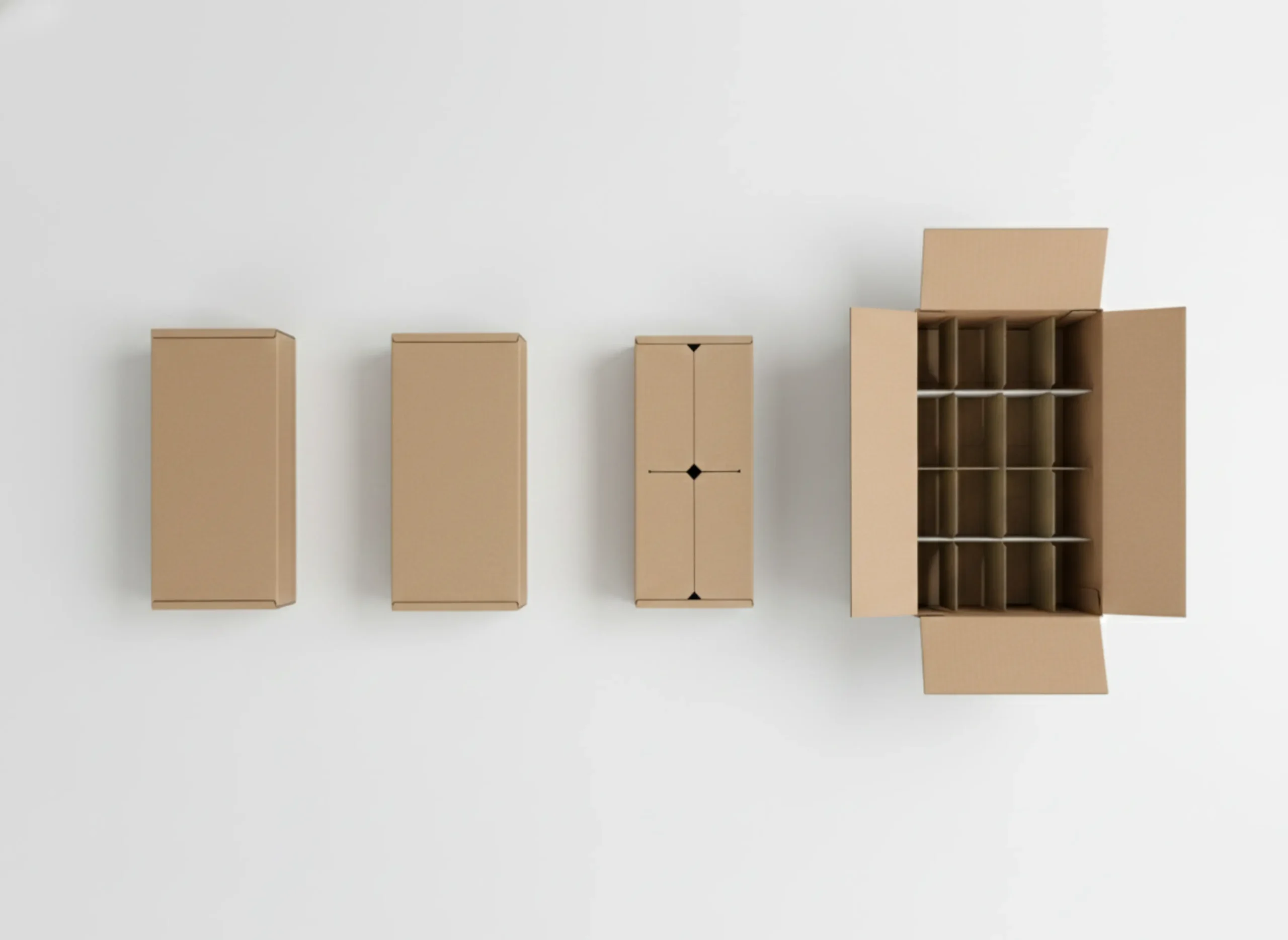
The Regular Slotted Carton (RSC) is the standard format for general shipping and master cartons, and the most cost-efficient option without a specific shape or branding requirement. Die-cut boxes suit products needing a specific shape, ventilation holes, or handle cut-outs, with higher tooling cost upfront but lower per-unit cost at volume. Multipack and tray cartons group retail units such as bottled or canned goods, improving shelf presentation and cutting individual handling. Partition, corner pad, and fitting inserts separate and cushion fragile or multi-item shipments, reducing in-transit movement and breakage.
Should Carton Boxes Be Printed for Business or Retail Shipping?
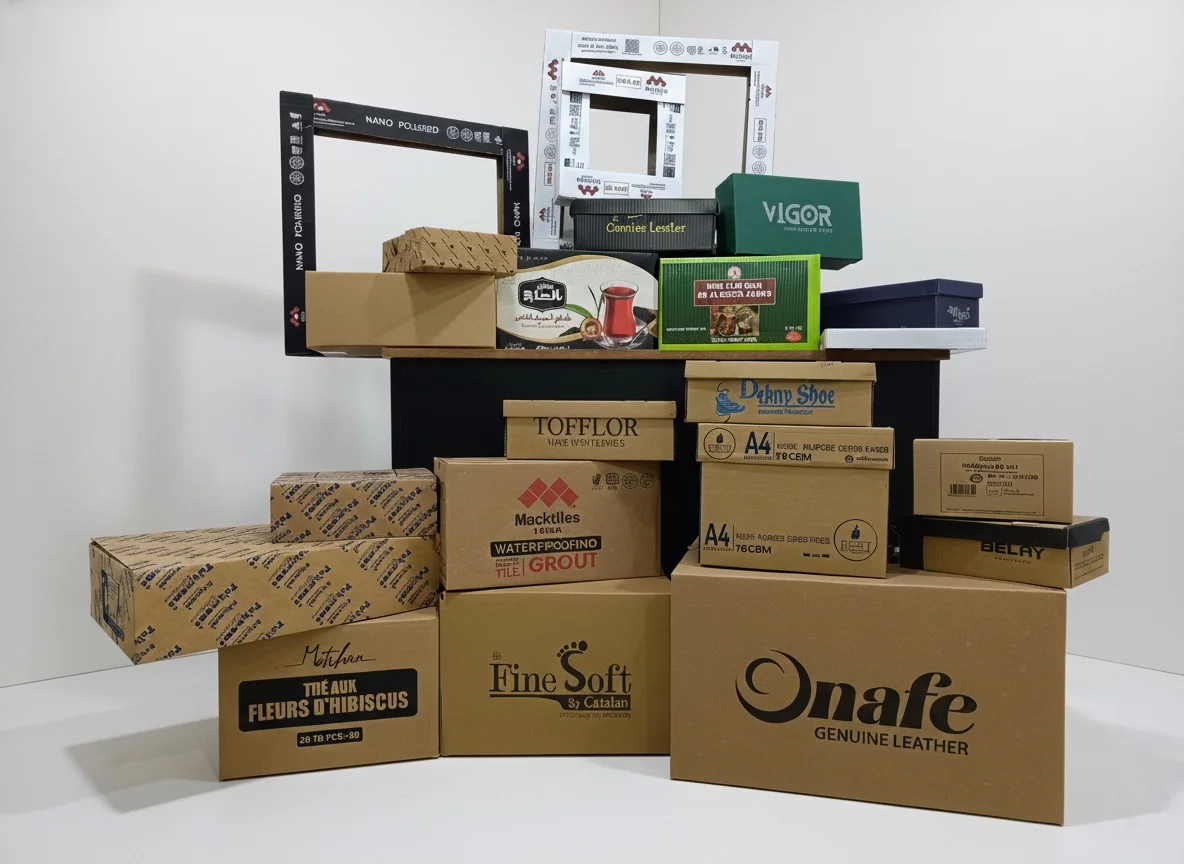
Businesses shipping direct to retail or consumers typically need at least one to two colour printing for brand recognition and handling instructions such as this way up, fragile, or stacking limits. Businesses shipping business-to-business master cartons often skip printing beyond basic identification, keeping per-unit cost down. Food-grade or export-bound cartons should also be checked against certification requirements, such as ISO 9001 for quality management or ISO 14001 for environmental management, where the receiving business or destination market requires supplier documentation.
How Much Do Carton Boxes Cost and What Affects Pricing in Sri Lanka?
Minimum order quantity often changes when moving from a standard stock size to a custom size, so confirm this before committing to a design. Lead time from order confirmation to delivery can extend during peak seasons, so predictable ordering cycles benefit from planning ahead. The price gap between standard stock sizes and custom die-cut sizes varies by supplier and volume. Delivery terms also affect final cost, since some quotes cover delivery to the business location while others are factory collection only. Businesses reporting on sustainability to their own customers should ask about recycled content percentage, since it is not always stated upfront.
What Causes Carton Boxes to Fail During Shipping
Reusing a box rated for a lighter product on a heavier one is one of the most frequent causes of in-transit failure, since a box’s strength rating degrades after its first use and after any exposure to moisture. A reused box should never be assumed to carry its original rating. Under-taping is the other common cause. The H-taping method, running tape along all seams rather than just the centre seam, is the minimum standard for any carton over 5 kg.
How to Choose a Reliable Carton Box Supplier in Sri Lanka?
Confirm three things directly with a manufacturer before ordering: the ECT or BCT rating for the specific box being quoted, not a general company average; the actual ply and flute combination being supplied, since terms like heavy duty are not a substitute for a stated rating; and lead time in writing, particularly for seasonal order cycles. A supplier able to state these figures precisely is typically better equipped to match packaging to a specific product.
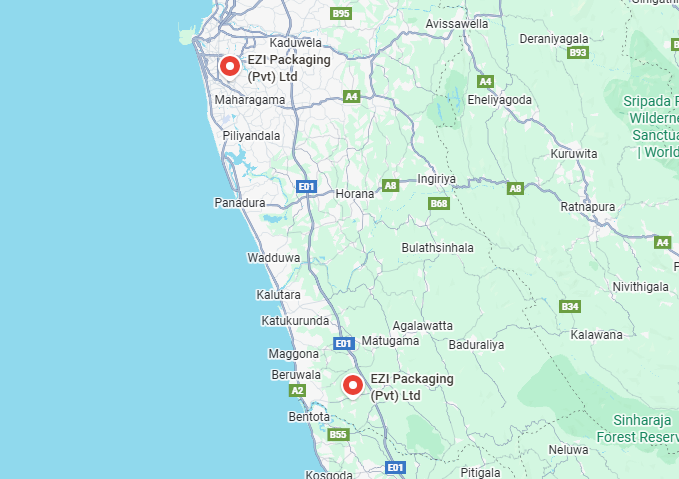
For businesses in Sri Lanka needing carton boxes matched to a specific product, weight, and shipping method, EZI Packaging manufactures corrugated cartons using ISOWA precision-controlled machinery, with sizing and strength specifications confirmed before production. Send an inquiry to get a specification recommendation for your product range.
Frequently Asked Questions

Post a comment